
Driving up to the sacred hills of Tirumala is a breathtaking experience, winding through the lush green peaks of the Seshachalam biosphere. However, because Tirupati is heavily connected to major cities like Chennai and Bangalore, many pilgrims arrive late in the evening and wonder: Is it safe to travel to Tirumala by car at night?
The short answer is yes, it is exceptionally safe—but only if you follow the strict rules and permitted timings.
The Tirumala Tirupati Devasthanams (TTD) operates one of the most meticulously maintained and heavily monitored hill station roads in India. To prevent accidents and protect the local wildlife, the TTD enforces rigid driving protocols.
This comprehensive 2026 guide covers everything you need to know about driving on the Ghat Roads at night, including exact gate closure timings, speed tracking systems, security checks, and emergency vehicle protocols.
1. The Dual Ghat Road System Explained
One of the primary reasons night driving is safe in Tirumala is because the TTD has eliminated the danger of oncoming traffic.
Unlike most hill stations in India where vehicles share a narrow two-way road, Tirumala features a dual Ghat Road system. The ascent and descent are completely separated by kilometers of forest.
- The Up Ghat Road (Ascent): Starts at the Alipiri Toll Gate. It spans roughly 18 kilometers and features 36 hairpin bends. It is exclusively for vehicles going UP to the temple.
- The Down Ghat Road (Descent): A slightly older, shorter route spanning 16 kilometers with 40 hairpin bends. It is used exclusively by vehicles coming DOWN to Tirupati city.
Because you never have to worry about a bus or truck barreling toward you in the dark from the opposite direction, the anxiety of night driving is massively reduced.
2. Exact Night Timings & Gate Closures (2026)
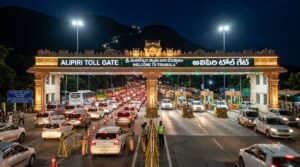
You cannot simply drive up the mountain at any hour of the night. The TTD strictly closes the Ghat Roads during the deepest hours of the night to allow for road maintenance, reduce noise pollution for wildlife, and prevent fatigue-related accidents.
Four-Wheelers (Cars, SUVs, Jeeps)
- Permitted Timings: 3:00 AM to 11:45 PM.
- Night Closure: The Alipiri Toll Gate is strictly closed to all four-wheelers from 12:00 Midnight until 3:00 AM. If you arrive at 12:30 AM, you must park your vehicle at the base and wait in your car until the gates reopen.
Two-Wheelers (Bikes, Scooters)
- Permitted Timings: 4:00 AM to 10:00 PM.
- Night Closure: Due to a higher risk of accidents, wildlife encounters, and weather drops, two-wheelers face a much longer closure. Bikes are completely prohibited on the Ghat Road from 10:00 PM to 4:00 AM. (Note: During specific periods of heavy fog or animal movement, TTD occasionally restricts two-wheelers from 6:00 PM to 6:00 AM).
Private Buses and Heavy Vehicles
If you are traveling in a massive private tourist bus, you cannot drive it up the hill at any time. Heavy private buses are permanently banned on the Ghat Road. You must park at the Alipiri parking lot and transfer to an official APSRTC electric or diesel bus.
3. The Strict 40-Minute Minimum Time Rule
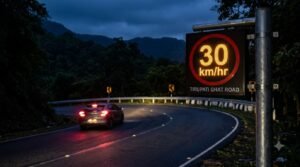
Most highways in India penalize drivers for going too slow. Tirumala penalizes you for going too fast.
To prevent reckless driving and brake failures on the steep curves, the TTD uses an automated digital tracking system.
- Time Stamping: When you pass the Alipiri Toll Gate, your vehicle’s license plate is scanned, and an entry timestamp is recorded.
- The Minimum Time: You are legally required to take a minimum of 40 minutes to complete the 18-kilometer ascent.
- Speed Limits: The speed limit on straight stretches is 40 km/hr, dropping to 20 km/hr on the hairpin bends.
- The Penalty: If you reach the summit checkpoint in 39 minutes or less, the automated system flags your vehicle for over-speeding. You will be pulled over and forced to pay a hefty traffic fine before proceeding to your accommodation.
4. Mandatory Vehicle & Driver Checklist
Before you attempt to climb the Ghat Road at night, you must ensure both your vehicle and the driver meet TTD’s strict safety standards.
- No L-Board Drivers: Learner’s license holders are completely banned from driving on the Ghat Roads. The driver must possess a valid, permanent driving license.
- Headlight Etiquette: Keep your headlights on low beam. Because it is a one-way road, high beams are not necessary to spot oncoming traffic, and they will severely blind the drivers in the cars ahead of you through their rearview mirrors.
- Brake and Coolant Checks: The descent (Down Ghat) is notoriously tough on brake pads. Before starting your trip to Tirupati, ensure your brake fluid is topped up, pads are not worn, and engine coolant is full. Use lower gears (Engine Braking) while coming down to avoid burning out your brakes.
- Two-Wheeler Helmets: Both the rider and the pillion passenger must wear ISI-certified helmets. Security at Alipiri will not let a bike pass if the pillion rider is bareheaded.
5. Security Checkpoints and Banned Items
Security in Tirumala is equivalent to airport standards. When you arrive at the Alipiri Toll Gate, you will be directed into a scanning bay.
- Luggage Offloading: All passengers must step out of the car. All heavy bags must be placed on the X-ray conveyor belt.
- Vehicle Inspection: Security personnel will manually inspect the trunk, undercarriage, and glove compartments of your car.
- Prohibited Items: To maintain the religious sanctity and ecological balance of the hill, you cannot carry:
- Alcohol or any liquor bottles (even if sealed).
- Non-vegetarian food of any kind.
- Tobacco, cigarettes, lighters, or matchboxes.
- Single-use plastic water bottles and polythene bags (Tirumala is a strict plastic-free zone).
- Drones or professional cinematography equipment without prior TTD permission.
6. Emergency Protocols & Wildlife Safety
The Seshachalam forest is home to leopards, deer, bears, and elephants. While the roads are heavily fenced and lit, wildlife crossings do occasionally happen at night.
- Do Not Stop: You are strictly prohibited from stopping your vehicle on the Ghat Road to take photos, rest, or feed animals. Monkeys and deer often linger near the road; feeding them causes them to run into traffic, leading to accidents.
- In Case of Breakdown: The entire 18-kilometer stretch is monitored by 24/7 CCTV cameras. If your car breaks down or you experience a flat tire, immediately pull over to the extreme left edge of the road and turn on your hazard lights.
- TTD Crane Service: TTD operates free patrol vehicles, ambulances, and towing cranes. In an emergency, dial the TTD Ghat Road helpline or simply wait with your hazard lights on; a patrol vehicle will usually spot you on camera and arrive within 15 minutes to tow you safely.
Conclusion
Traveling to Tirumala by car at night is incredibly safe, highly organized, and often much more pleasant than driving during the intense midday heat. As long as you arrive between 3:00 AM and 11:45 PM, maintain the 40-minute minimum travel time, and ensure your vehicle is in good condition, your journey up the sacred hills will be entirely stress-free.
Frequently Asked Questions (FAQs)
What should I do if I arrive at Alipiri at 1:00 AM?
If you arrive during the midnight closure, you have two options. You can park your car at the Alipiri parking lot and sleep inside your vehicle until the gates open at 3:00 AM. Alternatively, you can book a quick fresh-up room at one of the best hotels in Tirupati near the railway station and drive up the next morning.
Is it safe to drive to Tirumala during the monsoon rain at night?
During heavy rains, driving requires extreme caution. The roads can become slick, and occasional minor landslides can occur. TTD acts very quickly; if the rain is deemed too dangerous, they will temporarily close the toll gate until the weather clears. Always drive under 20 km/hr during wet conditions.
Can I take an Uber or Ola all the way to the top at night?
Yes, commercial taxis are permitted on the Ghat Road. However, be aware that many app-based drivers may ask for extra return-fare cash because finding a passenger for the downhill trip at night is very difficult.